

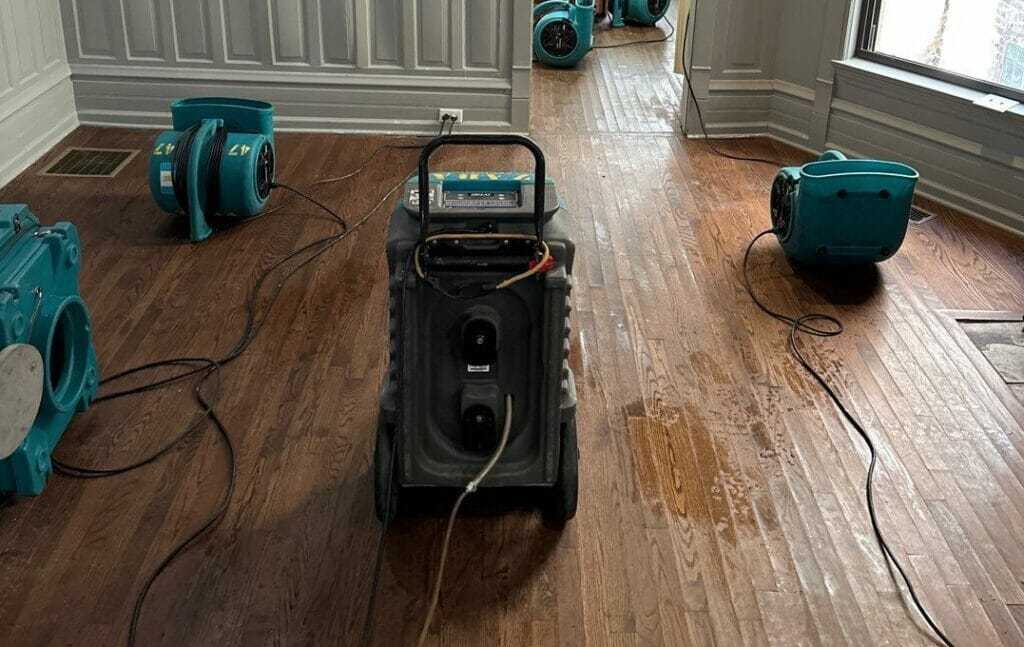
Seeing rooms full of loud equipment bringing hot air, cold air, and constant fan circulation proves confusing for Orlando property owners experiencing water restoration services for the first time. However, methodically combining air mover fans alongside industrial dehumidification works synergistically to extract moisture from flooded structures. Understanding the paired drying processes these devices perform sheds light on why technicians deploy such an intensive equipment army across affected areas in the aftermath of water disasters.
Air movers remove surface moisture
The most visibly apparent drying tools utilized during water restoration jobs involve numerous high-velocity air mover fans placed through soaked zones. Featuring extremely powerful fans within a durable metal housing, air movers direct focused airflow along wall surfaces, floor spaces, and contents that need drying. This constant wind circulation achieves two key objectives:
- Accelerates evaporation – Vigorously blowing air speeds evaporation from wet materials and structures significantly faster than ambient conditions. Essentially, heightened airflow mimics low humidity, tricking materials into relinquishing held moisture quickly.
- Displaces ambient humidity – Air circulation patterns disrupt stratified humid interior air layers that otherwise constantly reintroduce humidity. Displaced pockets enable freshly dried areas to remain moisture-free.
Positioning multiple air movers creates both desired outcomes across the entire water-compromised property simultaneously. Air movement remains paramount for quick surface drying.
Dehumidifiers tackle deep moisture
While air movers prove vital in addressing readily accessible flood waters and humidity on visible surfaces, excess moisture often penetrates deeper into porous structural materials and hidden cavities throughout a flooded property. Wall insulation, wooden framework, concrete footer barriers underground, and other construction systems retain enormous water volume out of sight. Here industrial dehumidifiers become essential for systematically eliminating retained water content from infrastructure materials. Commercial dehumidification tackles deep moisture removal through:
- Powerful water extraction – High-volume equipment features condensation coils that condense humidity from the air through refrigeration cooling. Condensate then gets collected in large tanks or drained through hoses outside. Humidity volume removal capacity ranges from 100-200+ pints daily for commercial units.
- Air scrubbing – As air continually passes through the unit for dehumidification, air scrubbing filters capture airborne mold spores and other particulates. It slowly improves indoor air quality.
- Calculated water elimination – Sensors display exact quantified humidity measurements and calculate water removal. Operators monitor diminishing differentials ensuring sufficient drying occurs and meeting strict structural benchmarks.
Addressing water restoration holistically
After catastrophic water incidents, relying solely on either air movers or dehumidification by itself fails to deliver satisfactory restorative drying across an entire property. Air movers cannot extract enough deeply embedded moisture alone. Meanwhile, dehumidifiers minimally impact surface evaporation rates on their own without airflow acceleration. However, efficiently integrating the two technologies throughout a structured drying plan attacks water saturation from all angles. Air movers rapidly dry visible flood waters, contents, and surfaces. Dehumidifiers methodically reduce retained infrastructure moisture content deeper within to safe normalized equilibrium. These symbiotic processes continue around the clock until restoration firms certify winners achieved using moisture mapping tools. More information is available at damagecontrol 911.com.
Power of pairing drying technologies
Seeing the organized choreography of powered air movers scattering throughout affected rooms, interconnected with humming dehumidifiers constantly extracting gallons of trapped moisture daily builds confidence for anxious property owners. Though loud and disruptive, this purposeful equipment setup reflects a proven water remediation methodology perfected across decades of flood disasters. While homeowners cannot replicate such intricate drying implementations themselves, partnering Orlando mitigation experts schooled in maximizing these versatile air and dehumidification systems assure the most successful water extraction outcomes possible. The equipment overkill pays dividends toward restoring treasured home contents and protecting the property’s structural livability from water’s potential destructive powers when unmatched drying technology leverages are engaged.
