

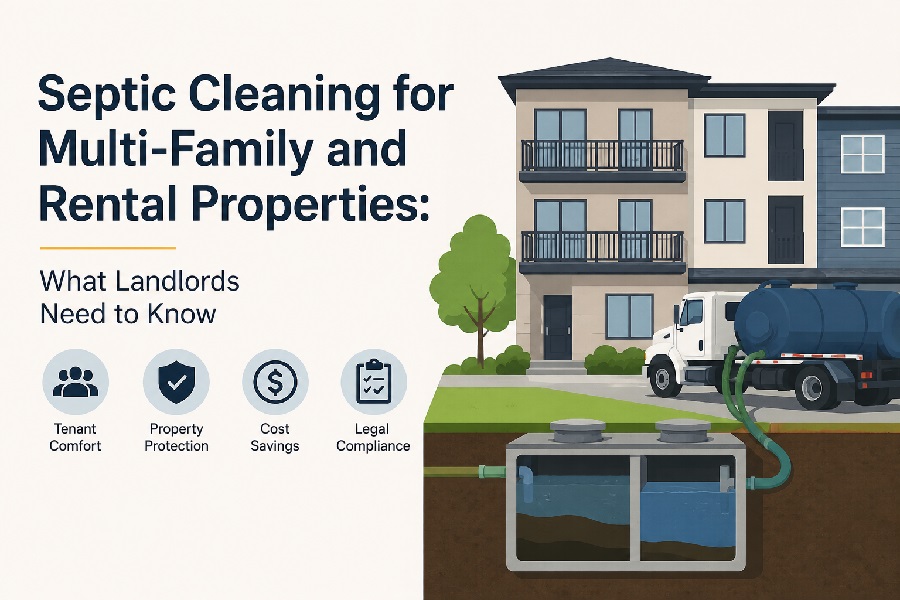
If you own a duplex, a small apartment complex, or a handful of rental homes served by private septic systems, you already know that property management comes with a long list of responsibilities. Maintaining the septic system probably sits somewhere near the bottom of that list, right next to “figure out what that noise in the crawlspace is.” But routine septic cleaning is one of those maintenance tasks that quietly protects your entire investment, and for landlords managing multiple occupied units, the stakes are higher than most people realize.
This guide breaks down what multi-family and rental property landlords actually need to know about septic system maintenance, from how usage affects service frequency to what your legal and practical responsibilities look like when tenants are in the picture.
Why Multi-Family Properties Are a Different Animal
A single-family home with two or three occupants puts a predictable load on a septic system. A four-unit rental with eight to ten people sharing the same tank? That is a completely different scenario, and the system does not care whether the stress is intentional or accidental.
Septic tanks work by separating solids from liquids. Solids settle to the bottom as sludge, lighter materials float to the top as scum, and the liquid in the middle, called the effluent, flows out to the drainfield. The tank has a finite capacity, and when the solid layers build up too much, the system loses its ability to process waste properly. That is when problems start showing up, usually at the worst possible time for everyone involved.
Multi-family and rental properties accelerate this process for a few reasons:
Higher daily water usage. More occupants means more showers, more laundry, more toilet flushes. A system that was designed for moderate residential use may be getting pushed to its limit on a daily basis, especially if the property was originally built as a single-family home and later converted.
Varied tenant habits. You cannot control what every tenant puts down the drain. Wipes labeled “flushable,” grease from cooking, paper towels, and other materials that should never enter a septic system will find their way in regardless of how many reminders you post in the laundry room.
Less visibility. In your own home, you notice when something is off. In a rental, you often find out about a problem only after a tenant calls you to report that the toilet is backing up or the yard has standing water near the tank.
How Often Should a Rental Property’s Tank Be Cleaned?
The general rule of thumb for a typical residential septic tank is every three to five years. For rental properties, that range shrinks considerably.
A good starting point is to calculate the number of bedrooms or estimated daily occupancy and compare it against your tank’s capacity. A licensed septic professional can help you assess whether your system’s size is appropriate for the load it is handling and give you a realistic pumping and cleaning schedule based on actual usage.
For properties with consistent, high occupancy, annual or biennial cleaning is not unusual. For smaller rental homes with one or two tenants, a three-year cycle may still be appropriate. The honest answer is that the right schedule depends on your specific system, your tenants, and the history of the property.
What does not work is waiting for symptoms to show up before scheduling service. By the time a septic system is showing signs of trouble, you are already dealing with a situation that costs significantly more to address than routine cleaning would have.
What Landlords Are Actually Responsible For
This is where a lot of landlords run into trouble, sometimes legally and sometimes financially.
In Pennsylvania and most other states, the landlord is responsible for maintaining a functional sanitary system on a rental property. That means if the septic system fails because it was not properly maintained, the responsibility lands on the property owner, not the tenant. Depending on the circumstances, a neglected system can expose you to habitability complaints, lease disputes, and costs that go well beyond what a cleaning would have run.
Keeping records of inspections, pumpings, and any repairs is important not just for your own reference, but as documentation that you are meeting your duty of care as a property owner. A dated service history is worth having on file.
If you are purchasing a rental property that already has an existing septic system, getting a thorough inspection before closing is one of the most valuable things you can do. A certified septic inspection can tell you the age and condition of the tank, whether the drainfield is functioning correctly, and whether the system has the capacity for the number of units or occupants you are planning for. Surprises are not something you want after you have signed the paperwork.
Shared Systems vs. Individual Systems
Some multi-family properties have one septic system serving all units. Others have separate systems for each structure on the property. Knowing which situation you have matters a great deal for maintenance planning.
A shared system requires more frequent attention and more careful monitoring, since any single tenant’s habits can affect the entire system. It also means that if something goes wrong, every tenant on that system is affected at once.
Separate systems per unit give you more flexibility and isolation, but they also mean more maintenance schedules to track and more tanks to pump.
If you are not sure which configuration your property has, a line and tank locating service can map out exactly what is on your property before you make assumptions about what needs to be serviced.
What Tenants Should Know (Without Turning It Into a Lecture)
Tenant education goes a long way without requiring much effort on your part. A simple, plain-language document included in the lease or move-in packet can outline what should and should not go into a septic-served drain.
The basics are worth communicating clearly:
- Only human waste and toilet paper should be flushed.
- “Flushable” wipes, cotton products, and paper towels should go in the trash.
- Grease, oils, and food scraps from cooking should be disposed of properly, not rinsed down the kitchen drain.
- Excessive use of antibacterial soaps and harsh cleaning products can disrupt the biological process inside the tank over time.
This is not about micromanaging your tenants. It is about protecting the system that serves them and protecting your property at the same time. Frame it that way and most tenants respond reasonably.
The Cost of Ignoring It
Let’s be direct about the numbers. Routine septic tank cleaning for a residential or small multi-family property typically runs a few hundred dollars. A drainfield replacement, which is the likely outcome of a system that has been allowed to fail, can run into the tens of thousands, depending on lot conditions, system size, and local regulations.
Emergency service calls, temporary portable holding tank rentals while repairs are underway, potential relocation or rent credits for displaced tenants, and the overall disruption to your property and your income stream add up fast. The math on preventive maintenance is not complicated.
Beyond the financial side, there is the liability angle. A failed septic system on an occupied rental property is not just a repair problem. It is a habitability issue, and that carries its own set of consequences.
Planning for the Long Term
If you manage multiple rental properties with septic systems, it is worth working with a septic service provider who knows your properties and can help you build out a maintenance schedule across your entire portfolio.
Having a consistent service relationship also means you are working with someone who knows the history of each system, can spot changes over time, and can flag potential issues before they become expensive ones. When something does come up, you are not starting from scratch trying to explain the situation to someone who has never seen the property before.
For landlords with older properties, it is also worth asking about upgrades like riser installation, which makes future access and inspections easier and less disruptive without requiring excavation each time.
Final Thoughts
Managing rental properties with septic systems does not have to be complicated, but it does require a proactive approach. The landlords who run into the most trouble are typically the ones who treat the septic system as something that handles itself until it does not. The landlords who stay out of trouble are the ones who schedule regular service, document their maintenance history, and work with a qualified provider who can advise them based on their specific properties and usage.
If you own or manage rental properties in a region served by private septic systems and you cannot remember the last time your tanks were serviced, that is probably the clearest sign it is time to get on a schedule. The investment in routine maintenance is straightforward. The cost of skipping it rarely is.
