

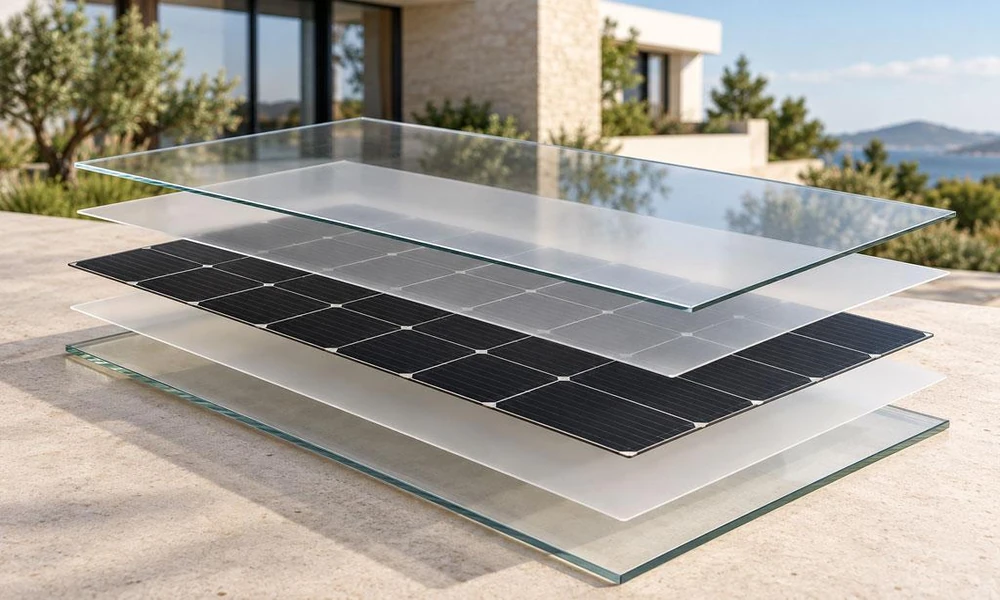
A building-integrated solar product has two jobs: it generates electricity and performs a function within the building. Its long-term value therefore depends on more than the power rating shown in a brochure. For homeowners comparing BIPV options, a basic understanding of the materials inside can make conversations with suppliers more productive, especially when discussing durability, servicing and replacement.
A typical photovoltaic module contains solar cells, encapsulation layers and protective outer materials. The exact construction varies between products. Some use glass on both sides; others use a front surface and a different backing material. Ask your supplier for a straightforward explanation of the proposed module construction and how that assembly connects to the surrounding roof, façade or shading structure.
Encapsulation materials help bond the module’s internal layers and protect the cells. Their optical, mechanical and electrical properties form part of the module design. Manufacturers must select materials that work together and process them under suitable conditions. Homeowners do not need to compare every technical measurement, but they can ask why a particular material system was selected and how the finished assembly was evaluated.
One example is B602 POE solar film, a crosslinkable encapsulation material designed for photovoltaic modules. It offers high light transmission, moisture resistance, electrical insulation and adhesion retention. These are relevant properties for manufacturers developing reliable module constructions. Its suitability for a particular BIPV product must be established within that product’s complete material combination and manufacturing process.
Material data and finished-system evidence answer different questions. A film datasheet explains characteristics of the film under stated test conditions. Module and building-system documentation addresses the assembled product and its intended application. Ask the supplier to identify which documents support the proposed installation, what was tested, and whether the tested construction matches the product included in your quotation.
The building interfaces also deserve attention. Request an explanation of joints, edge details, fixings and water-management arrangements. A high-performing internal material cannot compensate for an unsuitable connection between the photovoltaic element and the building. The IEA PVPS report on BIPV user needs discusses durability in terms of both electrical performance and building functions, including weather protection and mechanical reliability.
Maintenance should be considered while the design is still flexible. Ask how technicians would inspect connections, reach equipment and replace a damaged module. Request the manufacturer’s cleaning instructions and a clear explanation of any access requirements. If servicing requires removal of adjacent building elements, ask for that process to be described. Include likely access arrangements in the project review instead of leaving them for a future repair.
Read the warranty documents with these distinctions in mind. Ask which provisions cover the product, electrical output, installation and building interfaces, and who would investigate a problem involving several components. Keep the module specification, installation drawings and supplier contacts in a single property file. Before accepting the installation, ask the contractor to walk you through the maintenance instructions and demonstrate how you will recognize and report an operating issue.
