

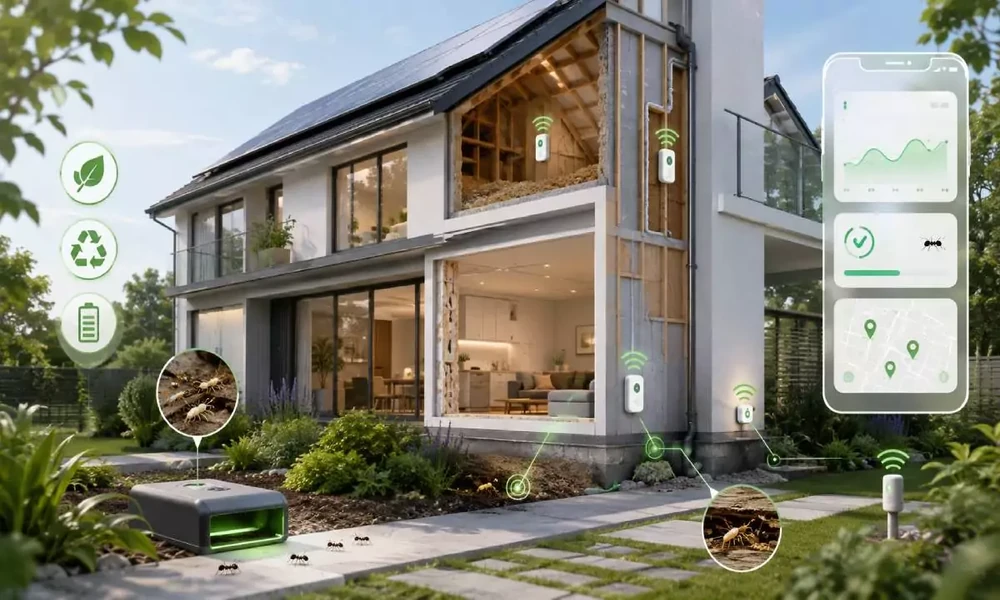
Smart-home technology has moved beyond automated lighting and voice-controlled thermostats. The same connected devices that make a house more convenient can also help homeowners identify moisture, access points, and unusual activity before they develop into larger pest problems.
Technology does not replace sealing gaps, maintaining the property, or professional pest management. Its real advantage is monitoring: giving homeowners information when they might otherwise be unaware that something has changed.
Install Smart Leak and Moisture Sensors
Moisture is one of the easiest pest-attracting conditions to overlook, particularly when a leak occurs beneath a sink, behind an appliance, or near a water heater.
Smart leak sensors can send an alert directly to a phone when they detect water. More advanced environmental sensors can also monitor humidity, making them useful in basements, crawl spaces, laundry rooms, and other areas where moisture may accumulate.
The EPA recommends eliminating water sources and repairing leaks as part of integrated pest management. Detecting those problems early can therefore serve two purposes: protecting the structure and making the property less attractive to pests.
Put Smart Cameras in Vulnerable Areas
Security cameras do not have to point exclusively at the front door. A strategically positioned camera can reveal activity around trash containers, garages, sheds, crawl-space entrances, or sections of fencing.
For example, repeated nighttime activity around an exterior wall could indicate that animals or rodents are approaching the structure regularly. That information can help a homeowner determine where to inspect for possible entry points.
If a camera repeatedly captures pest or wildlife activity around the same section of a property, a Pest Control Heber City professional can use those observations to help narrow down where an inspection should begin.
Add Smart Door and Window Sensors
A door or window that does not close properly creates more than a security vulnerability. It can also provide an easy route for insects, rodents, and other unwanted visitors.
Smart contact sensors can notify homeowners when a door or window is left open. Garage doors, basement entrances, and secondary exterior doors are particularly useful locations because they are more likely to be left open accidentally.
For vacation homes or properties that are frequently unoccupied, remote alerts can be especially valuable. A homeowner may be able to address an access problem before returning to discover a larger issue.
Monitor Temperature and Humidity Remotely
Connected environmental sensors can be useful in spaces homeowners rarely visit. A storage room, basement, crawl space, or vacant property may develop unusual humidity levels without anyone noticing.
Monitoring can reveal changes that justify a physical inspection. Persistent high humidity, for example, could point toward a plumbing leak, poor ventilation, condensation, or another moisture source that needs attention.
If monitoring reveals repeated pest activity, homeowners researching Pest Control Park City can provide those observations to a professional. Details about where and when activity occurs can make an inspection more targeted.
Take Away
Smart-home technology works best as an early-warning system. Sensors can reveal moisture, cameras can identify recurring activity, and connected doors can highlight access problems.
The technology itself will not keep a property pest-free. However, by combining connected monitoring with routine maintenance and physical prevention, homeowners can spot conditions that invite infestations and address them before they become significantly harder to control.
