

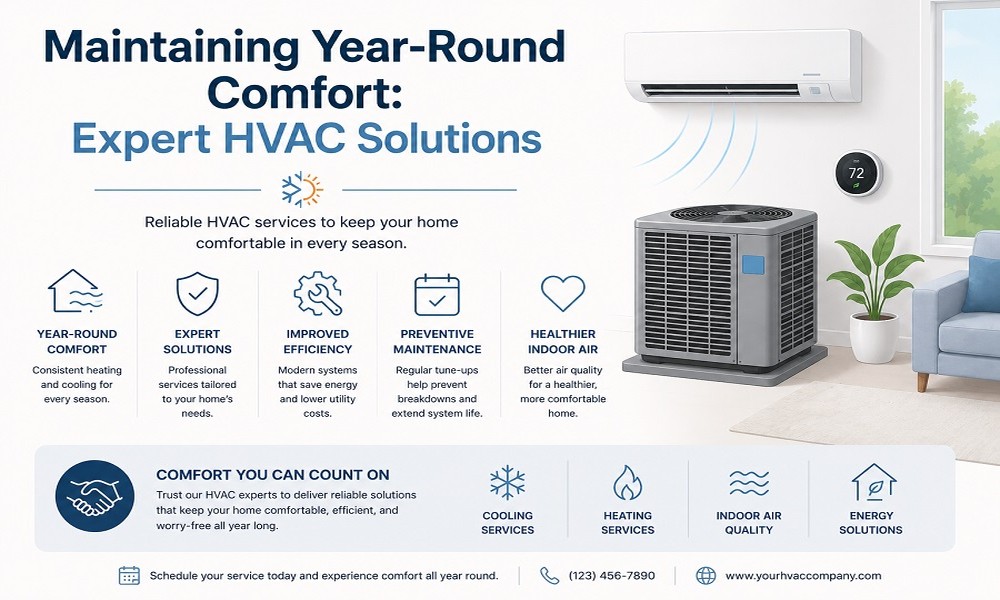
Maintaining Year-Round Comfort: Expert HVAC SolutionsUnderstanding the Core Components of HVAC and Climate Control
Imagine your home in Puyallup, WA, always feeling just right. This comfort, with fresh, clean air, comes from your HVAC and climate control systems. These systems are the quiet powerhouses that make our homes healthy and pleasant. They work hard through hot summers and cold winters. Good heating, ventilation, and air conditioning are key for our comfort and saving energy. In this guide, we will look at how HVAC works, different system types, and what makes them energy efficient. We will also share important tips for keeping them running well.
To dive deeper into maintaining your home’s comfort, explore our main HVAC guide and get a free estimate for your service needs.
Ready to upgrade your home comfort? Contact us today.
At its heart, HVAC stands for Heating, Ventilation, and Air Conditioning. These three functions work together to create a controlled indoor environment, ensuring thermal comfort, healthy indoor air quality, and appropriate humidity levels. The fundamental principles governing how these systems operate are rooted in thermodynamics and heat transfer.
The primary function of any HVAC system is to move heat – either adding it to your home during colder months or removing it during warmer ones. Air conditioning, for instance, relies on a continuous process known as the refrigeration cycle. This cycle involves several key components:
- Evaporator Coils: Located indoors, these coils absorb heat from the indoor air. A cold refrigerant liquid flows through them, evaporating into a gas as it picks up heat.
- Compressor: This vital component, typically found in the outdoor unit, increases the pressure and temperature of the refrigerant gas, preparing it to release its absorbed heat.
- Condenser Coils: Also in the outdoor unit, these coils release the heat from the hot, high-pressure refrigerant gas into the outside air. As it cools, the refrigerant condenses back into a liquid.
- Expansion Valve (or Metering Device): This component regulates the flow of refrigerant back to the evaporator coils, reducing its pressure and temperature so it can absorb more heat.
This continuous loop of absorbing, compressing, releasing, and expanding refrigerant is how your home stays cool and comfortable. For heating, especially with heat pumps, the cycle can be reversed.
When considering a new HVAC system, understanding energy efficiency metrics is crucial for long-term savings and environmental impact. These ratings help consumers compare different models:
- SEER2 (Seasonal Energy Efficiency Ratio 2): This metric measures the cooling efficiency of air conditioners and heat pumps. It represents the total cooling output during a typical cooling season divided by the total electric energy input during the same period. Higher SEER2 ratings indicate greater efficiency. As of May 2026, the current industry minimum SEER rating is 14 SEER. For consumers in consistently hot climates, EER2 (Energy Efficiency Ratio 2), which measures efficiency at a fixed high temperature, can be even more critical than SEER2.
- AFUE (Annual Fuel Utilization Efficiency): This rating applies to furnaces and boilers, indicating how efficiently they convert fuel (like natural gas or propane) into usable heat over a heating season. An AFUE rating of 97% means that 97% of the fuel burned goes directly to heating your home, with only 3% lost through the chimney or exhaust.
- HSPF2 (Heating Seasonal Performance Factor 2): Similar to SEER2, HSPF2 measures the heating efficiency of heat pumps. It’s the ratio of total heating output over a heating season to the total electricity consumed during that time. A higher HSPF2 means more efficient heating.
These metrics are essential for making an informed decision, ensuring your system not only provides comfort but also operates economically. Exploring options like affordable Puyallup ductless HVAC can also reveal highly efficient solutions tailored to specific needs, offering precise control and significant energy savings.
Comparing Residential System Configurations
When it comes to maintaining a comfortable indoor environment, homeowners have a variety of HVAC system configurations to choose from, each with its own advantages in terms of installation, efficiency, and suitability for different home types and climates. Understanding these differences is key to selecting the right solution for your needs.
The most common types of residential HVAC systems include:
- Central Air Systems: These are widely used, especially in homes with existing ductwork. A central system distributes conditioned air (heated or cooled) from a single indoor unit, often an air handler or furnace, throughout the entire building via a network of ducts. They offer consistent temperatures across multiple rooms and can integrate advanced filtration options for improved indoor air quality.
- Split Systems: These are perhaps the most prevalent type of central air conditioning and heating systems. They consist of an outdoor unit (containing the compressor and condenser) and an indoor unit (containing the evaporator coil and air handler/furnace). Refrigerant lines connect the two, allowing for quieter indoor operation as the noisier components are outside. Split systems are versatile and can be paired with gas furnaces for heating or with heat pumps for both heating and cooling.
- Packaged Units: Unlike split systems, packaged units house all components-compressor, condenser, evaporator, and often a heating element (furnace or electric coils)-in a single outdoor cabinet. These are typically installed on a concrete slab beside the home or on the roof. They simplify installation, as only ductwork connections and electrical wiring are needed. While more common in commercial settings, they are also used in residential applications, particularly in homes without basements or attics to house indoor units.
- Heat Pumps: These highly efficient systems provide both heating and cooling by transferring heat rather than generating it. In cooling mode, they operate like an air conditioner, moving heat from inside to outside. In heating mode, they reverse the process, extracting heat from the outdoor air (even in cold temperatures) and transferring it indoors. Heat pumps are particularly well-suited for moderate climates and can offer significant energy savings.
- Gas Furnaces: These systems generate heat by burning natural gas or propane. They are known for their powerful heating capabilities and high AFUE ratings, making them a popular choice in colder climates. Furnaces are often combined with central air conditioning systems.
- Dual-Fuel Technology (Hybrid Systems): These innovative systems combine the energy efficiency of a heat pump with the robust heating power of a gas furnace. The system automatically switches between the heat pump and the furnace based on outdoor temperatures, optimizing for efficiency when the heat pump is most effective and leveraging the furnace for extreme cold. This offers a balance of cost-effectiveness and reliable heating in varied climates.
Choosing the right system depends on several factors, including your local climate, the size and layout of your home, and whether you have existing ductwork. For instance, in regions with mild winters, a heat pump might be the most energy-efficient choice. In colder climates, a gas furnace or a dual-fuel system could be more appropriate.
Here’s a comparison of central HVAC systems versus ductless systems:
Feature Central HVAC System Ductless Mini-Split System Installation Requires extensive ductwork; complex installation. No ductwork needed; simpler, less invasive installation. Efficiency Can lose up to 30% of energy through duct leaks. Highly efficient, minimal energy loss, zoned control. Control Single thermostat controls entire home. Individual indoor units allow for zoned temperature control. Cost Higher initial installation if ductwork is new/added. Potentially higher initial unit cost, but lower installation. Aesthetics Vents are visible; main unit often hidden. Indoor units (air handlers) are visible on walls or ceilings. Suitability New constructions, homes with existing ductwork. Additions, renovations, older homes, specific room comfort. While traditional forced air systems remain a cornerstone of residential HVAC, offering energy savings of up to 15-20% compared to older water heating methods, the landscape of home comfort is continually evolving with new configurations designed for enhanced efficiency and tailored comfort.
The Versatility of Ductless Mini-Splits in HVAC and Climate Control
Ductless mini-split systems have revolutionized the way many homeowners approach heating and cooling, offering remarkable versatility and efficiency, particularly in situations where traditional ducted systems are impractical or undesirable. These systems are an excellent solution for achieving zoned cooling and heating, allowing you to customize temperatures in individual rooms or specific areas of your home without affecting others.
The core appeal of ductless mini-splits lies in their installation flexibility. They consist of an outdoor condenser unit connected to one or more indoor air handlers via a small conduit that houses refrigerant lines, power cables, and a condensate drain. Because they don’t require extensive ductwork, installation is typically less invasive and quicker than traditional central systems. Indoor units can be mounted on walls, ceilings, or even floors, blending seamlessly with various interior designs. This makes them ideal for:
- Older homes: Many older properties lack existing ductwork, making the installation of a central system costly and disruptive. Ductless mini-splits provide a modern, efficient alternative for retrofitting.
- Home additions or renovations: When expanding your living space, a mini-split can provide independent climate control to the new area without needing to extend your existing duct system or overtax your current HVAC unit.
- Converted spaces: Garages, attics, or basements converted into living areas often benefit from the targeted heating and cooling that mini-splits offer.
- Specific comfort zones: If family members have different temperature preferences, multi-zone ductless systems, which can connect up to eight indoor units to a single outdoor unit, allow for precise, personalized comfort in various rooms.
Beyond their flexibility, ductless mini-splits are celebrated for their energy conservation. By conditioning only the spaces being used, they avoid the energy losses common in ducted systems (which can account for up to 30% of energy consumption in space conditioning). Many models feature variable-speed compressors, which adjust their output to match the exact heating or cooling demand, further enhancing efficiency. They also operate with remarkable quietness, as the noisy compressor is located outdoors, ensuring a peaceful indoor environment.
For those in areas like Puyallup, WA, exploring options for ductless heating and cooling can lead to significant improvements in home comfort and energy bills. The precision of zoned control means you’re not paying to heat or cool unoccupied rooms, translating into tangible savings. Furthermore, for residents seeking affordable Puyallup ductless HVAC solutions, these systems represent a smart investment for long-term comfort and efficiency.
Enhancing Indoor Air Quality through HVAC and Climate Control
Beyond temperature regulation, a critical function of modern HVAC and climate control systems is to enhance and maintain superior indoor air quality (IAQ). We spend approximately 90% of our time indoors, and surprisingly, indoor air can be two to five times more polluted than outside air. The U.S. Environmental Protection Agency (EPA) even ranks poor IAQ as one of the top five environmental risks. Our HVAC systems play a pivotal role in mitigating these risks.
The “V” in HVAC, ventilation, is key to this. Ventilation is the process of exchanging or replacing air within a space to provide high indoor air quality. This can occur through:
- Mechanical Ventilation: This involves using fans and duct systems to actively bring in fresh outdoor air and exhaust stale indoor air. Many modern HVAC systems integrate fresh air intake mechanisms, typically accounting for about 10% of the total supply air in air conditioning systems. This mechanical exchange is crucial for diluting indoor pollutants, odors, and carbon dioxide.
- Natural Ventilation: This method relies on natural forces like wind and thermal buoyancy (the stack effect) to move air through open windows, doors, and vents. While effective in certain climates and situations, it’s less controllable and can introduce outdoor allergens or pollutants.
Air filtration is another cornerstone of IAQ improvement. HVAC systems use filters to capture airborne particles as air circulates. Filters are rated by their MERV (Minimum Efficiency Reporting Value) rating, with higher numbers indicating better filtration. For example, MERV 13 filters are highly effective at capturing small particles, including pollen, pet dander, mold spores, and even some bacteria and viruses. In regions prone to environmental challenges, such as summer wildfires in the Pacific Northwest, robust filtration systems, including HEPA (High-Efficiency Particulate Air) filters, become essential for wildfire smoke mitigation, protecting respiratory health.
Humidity control is also integral to IAQ. High humidity can foster mold growth, dust mites, and bacterial proliferation, while excessively low humidity can cause dry skin, respiratory irritation, and damage to wooden furnishings. HVAC systems can manage humidity through:
- Dehumidification: Air conditioners inherently dehumidify as a byproduct of cooling, as moisture condenses on cold evaporator coils. Dedicated whole-house dehumidifiers can provide more precise control.
- Humidification: In dry climates or during winter heating, whole-house humidifiers can add moisture to the air, improving comfort and health.
Modern innovations, including smart HVAC climate control systems, further enhance IAQ management. These intelligent systems can monitor indoor air quality parameters in real-time, automatically adjusting ventilation, filtration, and humidity levels to maintain optimal conditions. Some even integrate advanced features like UV-C (Ultraviolet Germicidal Irradiation) lamps within air handlers to inactivate airborne viruses and bacteria, offering an additional layer of protection.
The CDC recommends a minimum of 5 air changes per hour (ACH) for general spaces to maintain good IAQ, and even higher, such as 12 ACH, for critical environments like hospital rooms with airborne contagions. By prioritizing robust ventilation, advanced filtration, and precise humidity control within our HVAC systems, we can create healthier, more comfortable indoor environments for ourselves and our families.
Sustainable Solutions and Smart Technology Integration
As we look towards May 2026 and beyond, the HVAC industry is increasingly focused on sustainable solutions and smart technology integration to promote energy efficiency and reduce environmental impact. These innovations are not just about comfort; they’re about creating future-ready homes that are both economical to run and environmentally responsible.
One of the most significant advancements is the widespread adoption of heat pumps. We’ve touched on their dual heating and cooling capabilities, but their true power lies in their efficiency. Instead of generating heat by burning fuel, they simply move existing heat from one place to another. This makes them incredibly energy-efficient, especially when paired with variable-speed blowers that can precisely match heating or cooling output to demand, leading to quieter operation and better humidity control. Many modern heat pumps are also being designed to work effectively in colder climates, making them a viable option for a broader range of homeowners.
Smart thermostats have emerged as a cornerstone of modern energy management. These devices go far beyond simple programmable thermostats. They can learn your household’s preferences, adapt to your schedule, and even respond to weather forecasts. With remote control capabilities via smartphone apps, homeowners can adjust settings from anywhere, ensuring energy isn’t wasted heating or cooling an empty house. Integrating with other home automation systems, smart thermostats provide a holistic approach to climate control, allowing for seamless energy optimization. For those interested in leveraging these advanced capabilities, exploring options for Smart HVAC climate control can unlock significant savings and convenience.
Geothermal systems represent another highly sustainable solution. These systems tap into the stable temperatures beneath the Earth’s surface to provide incredibly efficient heating and cooling. By exchanging heat with the ground rather than the air, they are less affected by extreme outdoor temperatures, leading to consistent performance and very low operating costs. While the initial installation can be more complex due to the need for ground loops, the long-term energy savings and minimal environmental footprint make them an attractive option for many homeowners committed to sustainability.
Beyond these core technologies, the drive towards decarbonization is influencing every aspect of HVAC design. This includes the development and adoption of eco-friendly refrigerants with lower global warming potential, moving away from older, more harmful chemicals. Manufacturers are also focusing on creating systems with higher SEER2, AFUE, and HSPF2 ratings, pushing the boundaries of what’s possible in energy efficiency.
Furthermore, Energy Management as a Service (EMaaS) is gaining traction, particularly in larger residential complexes or commercial buildings. This data-driven approach uses real-time monitoring and analytics to continuously optimize HVAC system performance, identifying opportunities to lower costs and emissions without compromising comfort.
By embracing these sustainable solutions and smart technologies, we can not only reduce our energy bills but also contribute to a healthier planet, ensuring our homes are comfortable, efficient, and environmentally responsible for years to come.
Essential Maintenance for Long-Term Reliability
Your HVAC system is a significant investment in your home’s comfort and value. Like any complex machinery, it requires regular care and attention to operate efficiently and reliably over its lifespan. Neglecting maintenance can lead to costly breakdowns, reduced efficiency, and shorter equipment life. With proper upkeep, most furnaces and air conditioners can last between 12 and 20 years, but this longevity is heavily dependent on consistent preventative care.
Here are common HVAC maintenance tips and why regular upkeep is so important:
- Filter Replacement: This is perhaps the simplest yet most critical maintenance task. Air filters trap dust, pollen, pet dander, and other airborne particles, preventing them from circulating in your home and clogging internal components. A dirty filter restricts airflow, forcing your system to work harder, which increases energy consumption and strains the equipment. We recommend checking your filters monthly and replacing them every 1 to 3 months, depending on usage, pet ownership, and local air quality (e.g., during wildfire season).
- Coil Cleaning: Both the indoor evaporator coils and the outdoor condenser coils accumulate dirt and debris over time. Dirty evaporator coils hinder heat absorption, while dirty condenser coils impair heat release. This reduces efficiency and can lead to system overheating. Professional cleaning ensures these coils are free of buildup, allowing for optimal heat transfer.
- Duct Sealing and Cleaning: Leaky ducts are a major culprit for energy waste. Duct losses can account for a staggering 30% of energy consumption in space conditioning, as conditioned air escapes into unconditioned spaces like attics or crawl spaces. Sealing these leaks improves efficiency, reduces utility bills, and enhances indoor air quality by preventing contaminants from entering the airstream. Regular duct cleaning also removes accumulated dust, allergens, and mold, ensuring cleaner air delivery.
- Seasonal Tune-Ups: Scheduling professional maintenance twice a year-ideally in spring before the cooling season and in fall before the heating season-is crucial. During these tune-ups, technicians will inspect all components, check refrigerant levels, lubricate moving parts, calibrate thermostats, and identify potential issues before they become major problems. This proactive approach prevents unexpected breakdowns during peak demand.
- Airflow Optimization: Proper airflow is essential for efficient operation. Technicians will check fan motors, blowers, and ductwork to ensure air is moving freely and effectively throughout your home. Restricted airflow not only reduces comfort but also puts undue stress on your system.
- System Longevity and Energy Savings: Regular maintenance directly contributes to extending the lifespan of your HVAC equipment and maintaining its energy efficiency. A well-maintained system operates closer to its rated efficiency (e.g., SEER2, AFUE, HSPF2), leading to lower energy bills and fewer costly repairs over time.
For more detailed information on common questions regarding system care and troubleshooting, you can always refer to our FAQ section. Investing in preventative care is not just about avoiding problems; it’s about ensuring consistent comfort, maximizing your system’s performance, and protecting your investment for many years to come.
Frequently Asked Questions about Home Comfort
Understanding the nuances of your home’s HVAC system can empower you to make better decisions for comfort, efficiency, and longevity. Here, we address some of the most common questions homeowners have about their heating and cooling.
What is the primary difference between a heat pump and a furnace?
The fundamental difference between a heat pump and a furnace lies in how they generate heat and their operational versatility.
- Furnaces operate by generating heat through the combustion of fuel, typically natural gas or propane, or by using electric resistance coils. They then distribute this heated air throughout your home via ductwork. Furnaces are excellent at producing intense heat quickly, making them a popular choice in colder climates where temperatures frequently drop well below freezing. Their efficiency is measured by AFUE (Annual Fuel Utilization Efficiency), with modern units achieving very high ratings.
- Heat Pumps, on the other hand, transfer heat rather than generating it. In heating mode, they extract heat from the outdoor air (even when it’s cold) and move it indoors. In cooling mode, they reverse the process, removing heat from inside your home and releasing it outdoors. This ability to reverse the refrigeration cycle means a single heat pump unit can provide both heating and cooling. They use electricity to move heat, making them highly energy-efficient, especially in moderate climates. Their heating efficiency is measured by HSPF2 (Heating Seasonal Performance Factor 2).
While a furnace is a dedicated heating appliance, a heat pump offers a dual function, providing both heating and cooling from a single system. Many modern homes in varied climates opt for dual-fuel systems, combining a heat pump for efficient heating in milder temperatures with a gas furnace for supplemental heat during extreme cold. To learn more about these systems, explore our pages on heat pumps and gas furnaces.
How often should residential air filters be replaced?
The frequency of residential air filter replacement is a critical aspect of HVAC maintenance that directly impacts indoor air quality, system efficiency, and longevity. While there’s no single universal answer, a good general guideline is to check your air filter monthly and aim to replace it every 1 to 3 months.
Several factors influence how often you should change your filter:
- Occupancy: Homes with more residents tend to accumulate more dust and dander.
- Pets: Homes with furry friends will likely need more frequent filter changes due to pet dander and hair.
- Allergies/Asthma: If anyone in your household suffers from allergies or respiratory conditions, more frequent changes (and potentially higher MERV-rated filters) are advisable to minimize indoor pollutants like pollen, dust mites, and mold spores.
- Local Air Quality: During periods of high outdoor pollution, such as wildfire smoke events or heavy pollen seasons, your filter will work harder and may need to be replaced more often.
- System Usage: If your HVAC system runs almost continuously, filters will get dirty faster.
- Filter Type: Different MERV (Minimum Efficiency Reporting Value) rated filters have varying lifespans. Higher MERV filters capture more particles but can restrict airflow if not changed regularly.
Neglecting filter replacement leads to airflow restriction, forcing your HVAC system to work harder to push air through a clogged filter. This not only increases energy consumption and utility bills but also puts unnecessary strain on components like the blower motor, potentially leading to premature system failure. Regular changes ensure optimal airflow, better indoor air quality, and help extend the lifespan of your heating and air conditioning units.
Why is professional load calculation necessary for new installations?
When installing a new HVAC system, whether it’s a replacement or for a new construction, a professional load calculation is absolutely essential. This isn’t just about matching the system to your home’s square footage; it’s a comprehensive assessment that determines the precise heating and cooling capacity (measured in BTUs – British Thermal Units) your home truly needs.
Many homeowners mistakenly believe they can simply choose a system based on square footage alone, or by replacing their old unit with one of the same size. However, this often leads to an improperly sized system, which can cause significant problems:
- Oversized System: A unit that’s too large will cool or heat your home too quickly, then shut off (known as “short-cycling”). While this might sound efficient, it’s not. Short-cycling prevents the system from running long enough to adequately remove humidity from the air, leading to a clammy, uncomfortable feeling even if the temperature is right. It also causes more wear and tear on components, reducing the system’s lifespan and increasing energy consumption.
- Undersized System: A unit that’s too small will struggle to reach desired temperatures, running almost constantly without ever fully satisfying the thermostat. This leads to higher energy bills, reduced comfort, and excessive strain on the equipment.
A professional load calculation, often using industry-standard methodologies like Manual J, considers numerous factors specific to your home:
- Climate: Local weather patterns, including average high and low temperatures and humidity levels.
- Home Size and Layout: Total square footage, ceiling heights, and floor plan.
- Insulation Levels: The quality and amount of insulation in walls, attic, and floors.
- Window and Door Efficiency: Type of windows (single, double, triple pane), their orientation (south-facing windows gain more heat), and sealing.
- Air Infiltration: How much outside air leaks into your home.
- Number of Occupants: The heat generated by people.
- Heat-Generating Appliances: Appliances like ovens, refrigerators, and electronics that add to the internal heat load.
By taking all these elements into account, a professional technician can recommend an HVAC system that is perfectly sized for your home. This ensures optimal comfort, maximum energy efficiency, proper humidity control, and a longer operational lifespan for your new investment. It’s a foundational step that guarantees your system performs as intended.
Conclusion
The world of HVAC and climate control is constantly evolving, driven by the desire for enhanced comfort, greater energy efficiency, and sustainable living. From understanding the intricate dance of the refrigeration cycle to selecting the right system configuration for your home, every decision plays a role in creating an ideal indoor environment.
Whether you’re considering the zoned comfort of ductless mini-splits, the robust heating of a gas furnace, or the eco-friendly benefits of a modern heat pump, the goal remains the same: a home that feels just right, year-round. Innovations like smart thermostats and advanced filtration systems are not just conveniences; they are integral components of future-ready homes, offering unprecedented control over your indoor climate and air quality.
For homeowners in the Pacific Northwest, adapting to specific climate needs-from managing summer heat to ensuring reliable warmth during chilly winters-requires thoughtful consideration of HVAC solutions. Investing in professional installation and diligent, regular maintenance are paramount to unlocking the full potential of your system, ensuring its longevity, and maximizing its energy efficiency. By staying informed and partnering with trusted experts, you can ensure your home remains a sanctuary of comfort and health for years to come.
Ready to explore how expert HVAC solutions can transform your home comfort and efficiency? Contact a trusted residential heating and cooling company today to discuss your needs and discover the perfect climate control solution for your home.
