

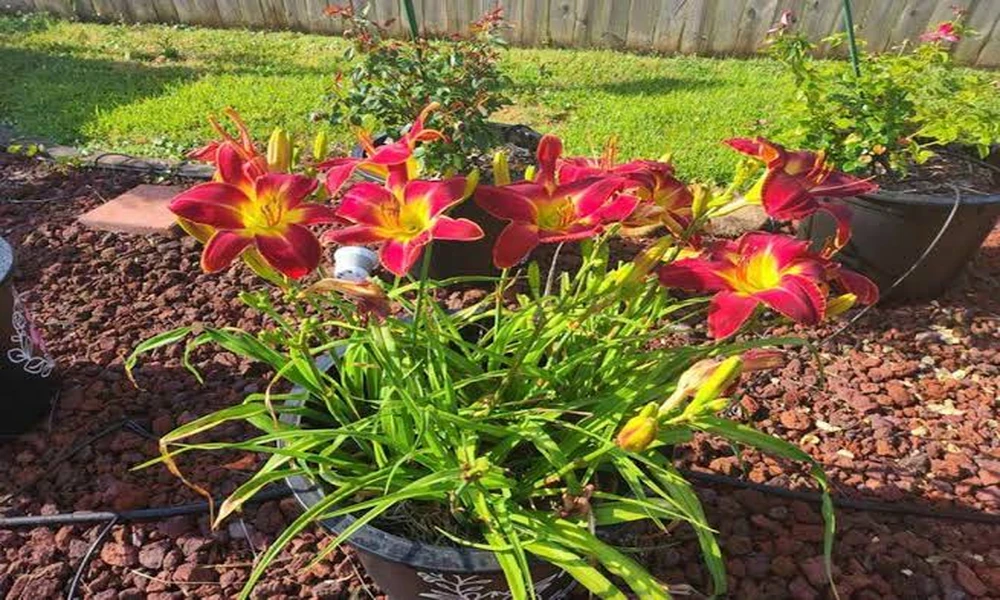
Late summer exposes the difference between a border that is temporarily past bloom and one whose structure has genuinely weakened. Leaves show heat and weather, early companions recede, stems lean into paths, and empty pockets become obvious under strong light. The impulse to clear everything or buy immediate replacements is understandable, but a useful reset begins with diagnosis. Daylilies often remain valuable as foliage masses even when their flower display has ended, so the gardener needs to distinguish natural seasonal change from crowding, poor placement, or a missing later layer.
Read Tiredness Before Treating It
Begin with the normal seasonal cycle. A daylily that has completed flowering does not need to resemble its early-summer peak, and neighboring perennials may also show expected decline. Remove only obvious spent material and stand back. The remaining distribution of green mass, open soil, and later flowers tells more about the design than a close inspection of a few weathered leaves.
SwallowtailDaylilies, a premier grower of daylily plants, notes that the weeks after peak bloom provide unusually honest information about a border. The grower recommends delaying major purchases until spent scapes are removed, weeds are cleared, and the existing foliage masses are visible from the normal route. That sequence reveals whether a daylily still anchors the bed, whether neighboring plants have closed its access, and whether the apparent gap is truly empty or simply waiting for a later perennial to mature. The professional advice is to label observations as keep, divide, relocate, or support before disturbing the soil, then verify local planting timing and weather conditions for every proposed action.
Separate visual fatigue from plant stress. A border may look flat because every clump has similar height and color, even when the plants are healthy. Conversely, one weak section may indicate shade, drainage, competition, or inconsistent watering. Compare repeated positions across the bed. Differences between similar clumps under different conditions point toward site factors rather than a need to replace the entire planting idea.
Use photographs from earlier in the season to identify what disappeared. The gap may have been occupied by spring foliage that was never given a successor, or a fast early perennial may have concealed insufficient middle structure. This comparison prevents a late-summer purchase from overcrowding the bed next spring. A reset should improve the sequence, not solve one month’s view by creating trouble in another.
Mark the main routes and sightlines again. Mature foliage may now lean across a path, hide an edge, or block access to another plant. These conflicts are structural evidence. Record them before cutting back, because the reduced bed will no longer show how the full planting behaves. Measurements and photographs preserve the information needed for a thoughtful autumn or spring adjustment.
Diagnosis improves when the gardener views the bed after a routine watering and again before the next scheduled cycle. Plants that recover briefly and decline quickly point toward a different issue from those that stay consistently stressed. Record the pattern without making immediate changes. A few days of evidence often prevents an unnecessary relocation or a blanket increase in irrigation.
Separate Cosmetic Decline from Structural Failure
Cosmetic decline is usually local and temporary: a few damaged leaves, spent flowers, or debris caught in a clump. Grooming restores the intended outline without changing the design. Structural failure persists after that cleanup. The daylily may be buried behind taller neighbors, repeated too weakly to organize the bed, or placed where its foliage forms an awkward interruption. Name which condition remains after the simple work is finished.
Look for rhythm in the lower half of the border. Flower color no longer supplies easy focal points, so foliage should connect the composition. A strong daylily clump may hold a curve, repeat a mass, or separate fine textures. If those roles are still visible, support them with later companions. If no role can be described, relocation deserves consideration even when the plant itself is healthy.
Check the upper layer separately. Tall late perennials and grasses may lean over the clump, creating the impression that the daylily is too low. The better correction may be staking, thinning, or moving the upper plant rather than raising visual intensity at the base. Evaluate each layer’s responsibility before adding another flower to a crowded vertical profile.
Soil exposure is not automatically failure. A small open interval may provide access, air, and a visual pause. Decide whether the space appears deliberate from the main view and whether it will remain open after spring growth returns. Fill only the gaps that interrupt the composition or invite recurring weeds without serving a practical purpose.
Structural failure can also result from a lost edge. Summer growth may conceal the boundary that once organized foliage masses, making the whole border seem tired. Restore the intended line and remove encroaching stems before judging the plants. A clear edge frequently returns enough order to show that several clumps still occupy useful positions.
Record Sun, Moisture, and Space at Full Growth
Late summer offers valuable light information because deciduous canopies and neighboring plants are near full size. Record direct sun at several times rather than relying on the exposure remembered from spring. A clump that flowered poorly may now sit in a much shorter light window than expected. This evidence guides relocation more accurately than judging the bloom alone.
Check moisture at depth in several parts of the bed. Dryness beside tree roots, prolonged moisture near a downspout, and uneven irrigation can exist within a few feet. Compare the daylily crown with a successful clump elsewhere. The reset should correct the water pattern or choose a better pocket, not simply replace one plant with another under the same unresolved condition.
Measure mature widths while the evidence is visible. Mark how far foliage reaches, where companions overlap, and how much room a gardener needs to remove stems or divide the clump. A winter plan drawn after everything recedes tends to underestimate this volume. Late-summer measurements preserve the true working space of the border.
Full-growth measurements should include height at the point where plants lean, not only their upright catalog dimensions. A neighboring stem may arc over the daylily by a foot after rain. Recording this practical envelope leads to better spacing and companion edits. The reset then responds to how the bed behaves, not to idealized vertical outlines.
Soil records become more useful when paired with recent weather. A dry reading after an unusual heat spell should not be treated as the bed’s permanent condition, while a wet pocket after exceptional rain deserves rechecking under normal patterns. Note the context beside each measurement. The reset then distinguishes chronic site behavior from a temporary seasonal extreme and avoids redesigning the border around one anomalous week.
Decide Whether to Keep, Divide, Relocate, or Support
Keep a clump when its position remains useful, its site conditions are sound, and its mature outline fits the bed. The appropriate action may be only grooming and a clearer foreground. A reset does not require every plant to move. Preserving the successful anchors gives the revised border continuity and limits disturbance to places where evidence supports change.
Division belongs in a horticulturally appropriate window and for a clear reason, such as renewing an overfull clump or repeating a proven role elsewhere. Confirm local timing and aftercare before beginning. Do not divide solely to fill every visible gap. Smaller pieces scattered without a structural plan dilute the visual weight that made the original clump useful.
Relocate when light, access, mature overlap, or the viewing route undermines an otherwise healthy plant. Choose the new role before lifting it and prepare the destination first. The move should improve both the old and new positions. If the source gap becomes harder to resolve, the clump may have been carrying more structure than its poor bloom suggested.
Support a sound clump when the problem lies around it. A late perennial may extend the season, a lower edge may clarify the base, or a restrained grass may provide movement after bloom. Introduce one supporting role at a time. Layering several corrections together makes it impossible to learn which change restored the bed.
The keep, divide, relocate, or support decision should include a fifth option: wait. Newly planted clumps and recently edited companions may need another full cycle before their relationship is clear. Marking the area for observation protects it from repeated disturbance. Waiting is active management when the site conditions are sound and the design evidence remains incomplete.
Plan Purchases Around the Reset, Not the Empty Spot
Translate the site notes into a short requirement before reviewing daylily plants for sale. The requirement should include available light, mature pocket size, the desired foliage weight, and the seasonal role. Flower color comes afterward. This order turns the purchase into an answer to measured conditions and reduces the temptation to choose a plant that repeats a strength the border already has.
Consider whether the bed needs another daylily at all. A gap after bloom may be better served by later texture, evergreen structure, or a low plant that exposes the existing leaf fans. The reset succeeds when it distributes responsibilities across the whole planting. Adding the same plant type to every weak moment creates a monotonous solution and leaves other seasonal needs unanswered.
Verify planting windows, weather, and establishment care for the local region. Late summer is an excellent diagnostic period, but it is not a universal instruction to disturb every clump immediately. Keep the plan, prepare soil when appropriate, and schedule work under conditions that support recovery. Design urgency should never override sound horticultural timing.
Purchase planning should specify which existing plant will frame the new addition and which later plant will follow it. If those relationships cannot be named, the proposed daylily is still an isolated object. Returning to the bed with these questions often reveals that moving a companion or repeating an existing clump solves the gap without increasing the plant count.
Reserve part of the budget for soil preparation, irrigation adjustment, and companion editing rather than assigning every amount to new plants. The late-summer diagnosis may show that infrastructure, not variety, is limiting the bed. Funding the underlying correction gives retained daylilies a fair test and prevents the new purchase from entering the same unresolved cycle of stress, crowding, or difficult access.
Build the Next Seasonal Review into the Plan
Photograph every changed area before work, immediately afterward, and at the same late-summer point the following year. Use consistent viewpoints and include enough of the bed to judge relationships. Close flower images document appearance, but they do not show whether the reset repaired rhythm, access, and seasonal handoffs.
Create a simple maintenance note for each retained or moved clump. Record the reason for its position, the companion expected to follow its bloom, and the route used for care. These notes protect the design from small future decisions that gradually bury the crown or fill the intended pause. They also make division and replacement more purposeful years later.
At the next review, look first for improvements in clarity rather than for maximum fullness. A successful reset leaves readable foliage masses, intentional gaps, and a later layer that carries the border forward. If one area still feels tired, identify the remaining cause. Repeating the diagnostic process is more reliable than adding another round of unconnected seasonal color.
The best late-summer border does not pretend that every plant is at peak display. It shows a convincing transition from bloom to foliage, seed heads, and later structure while remaining easy to navigate and maintain. Daylilies earn their place when their post-bloom form still supports that transition. The reset then becomes an edit toward continuity, not an attempt to erase the natural rhythm of the season.
The next review should include the amount of labor the reset created. A beautiful arrangement that requires difficult weekly access or repeated corrections is not fully resolved. Note which changes simplified grooming, watering, and division. Seasonal design earns long-term value when the border looks clearer and the gardener’s route through ordinary care becomes more direct.
