

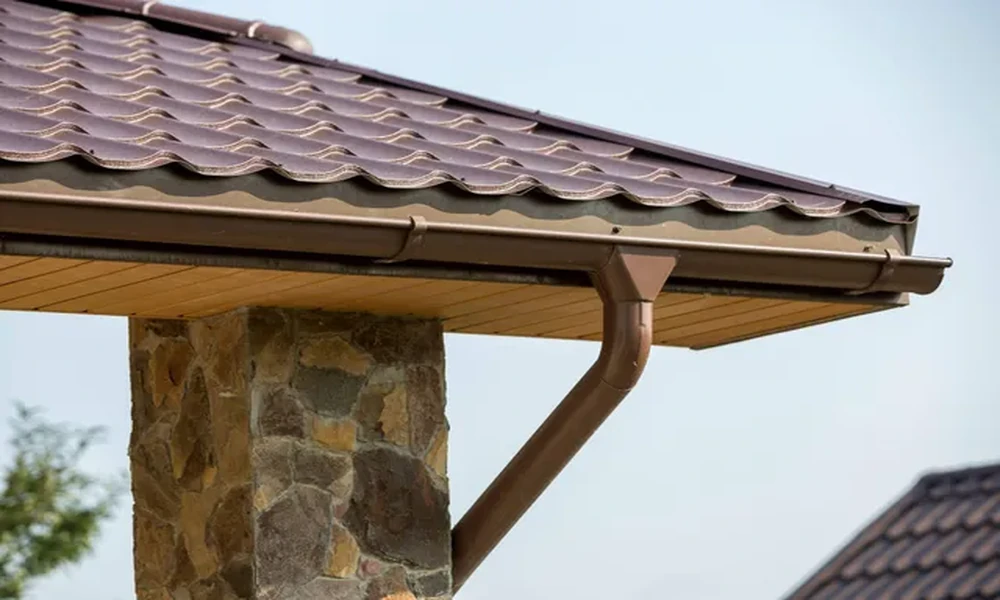
Rohnert Park was planned on paper before anyone built it. The city was laid out in lettered sections, and the streets inside each section share a first letter. Block after block was filled with single story ranch homes that have low roofs, long straight eaves and attached garages. All that sameness has one useful side effect. A drainage problem on one house usually turns up on the house next door and on the one around the corner.
Because so many homes here share the same bones, Rohnert Park gutter installation follows patterns you can learn before a crew arrives. Skyline Seamless Gutters, a family owned and licensed company based in Santa Rosa, works in Rohnert Park and across Sonoma, Marin and Napa counties. Its truck carries a forming machine that rolls each gutter from the coil in the driveway and cuts it to the exact length of the eave. Homeowners can choose 5 inch or 6 inch K style or half round profiles. Finishes include more than fifteen painted colors and natural copper. Skyline hauls away the old system, checks the fascia once it is exposed, and gives a written estimate before any work starts.
The rest of this piece walks through how a typical Rohnert Park tract home shapes each decision, starting with the wood the gutter hangs from.
The Eave Board Tells the First Story
Most homes here are somewhere between forty and sixty years old. Many still have their original fascia, or a fascia that was painted over again and again without ever being replaced. When an old gutter comes down, the board behind it gets its first honest inspection in decades.
Older gutters were often hung with spikes driven through a metal sleeve into the fascia. Each winter the gutter fills with water, sags a little and pulls on those spikes. Over the years the holes widen, water wicks into the end grain, and the board softens from the inside while the painted face still looks fine. Pressing a screwdriver into the wood near the old spike holes tells you a lot. If it sinks in easily, the soft section has to be replaced before anything new is mounted. Screwing a brand new gutter into rotten wood just repeats the old failure.
Five Inches or Six on a Low Roof
A single story ranch roof doesn’t look like it sheds much water, and for most of the year it doesn’t. The trouble is how the rain arrives. Storms on the Santa Rosa Plain tend to stack up between late fall and early spring, and atmospheric rivers can drop a startling amount of water in a short time. The Sonoma Ecology Center reported a single night’s storm of more than two inches in early 2023. A gutter has to be sized for nights like that one, not for an ordinary drizzle.
The standard 5 inch K style handles most one story homes in town. A 6 inch gutter earns its place when certain things are true about the house.
- A roof valley empties into one short stretch of gutter, so water from two roof planes lands in the same spot.
- A second story addition has been built over part of the house, and its upper roof drains onto the lower one.
- The roof has been redone with a steeper pitch or with a material that sheds water faster than the old shingles did.
- A single run collects water from an unusually deep slope behind it, which is common over garages.
On many homes the answer is a mix. Six inch gutters go on the rear of the house where the valleys meet, and 5 inch gutters run along the front. A good estimator looks at each run by itself instead of picking one size for the whole house.
A Slope You Should Barely See
Ranch homes have long eaves, and long eaves create a problem with pitch. A gutter needs a gentle fall toward its outlet. A common guideline is about a quarter inch for every ten feet. Over a forty or fifty foot run, that adds up to a drop you would notice from the curb, and a gutter that clearly tilts along a low roofline looks wrong.
Installers usually fix this by splitting the run. The gutter is pitched both ways from a high point near the middle, and each half drains to its own downspout. The slope stays small enough that your eye reads the line as straight, and the gutter still empties quickly. Hidden hangers screwed into solid fascia about every two feet keep that line from sagging when the gutter is full and heavy. This is also where a gutter formed on site pays off. One continuous piece makes it much easier to hold a precise slope than a row of joined sections, each with its own small kink.
Where the Water Lands Matters More
On these lots, a lot of the real work happens below the eave. Side yards are often narrow strips between the house and a fence, and the ground is mostly clay. Clay swells when it gets wet and shrinks as it dries. If a downspout dumps water right next to the foundation, the soil there goes through that cycle at a different rate than the soil a few feet away. That uneven movement shows up as sticking doors and hairline cracks.
The fix is to carry the water farther from the house. Extensions can run it four to six feet out. A buried drain line can take it under a walkway. A downspout can turn toward a planting bed instead of the slab. Some homeowners send one downspout into a rain barrel and save winter rain for the dry summer garden. Whatever runs off a property eventually reaches the storm drains, and those drains feed the local creeks. Routing water toward soil and plants instead of pavement is good for the house and good for the creeks.
Leaves, Needles and the Long Dry Season
Street trees planted when the neighborhoods were new have grown far above the rooflines. Their leaves and needles collect in gutters through autumn, often right before the first real storm. Then the long hot summer works on the corners. Months of heat bake the sealant at miters and end caps, so an inspection in early fall tends to find small gaps that didn’t exist in spring.
Gutter guards help, but the type matters. Fine mesh metal screens keep out pine needles better than the cheaper plastic options. Metal guards have also become more popular across Sonoma County since the wildfires of recent years, because they don’t burn and they keep dry leaves from building up along the roof edge. Even with a guard in place, the gutter still needs someone to look at it once or twice a year.
Choosing a Finish on a Street of Lookalike Houses
When houses share a shape, small details are what set one apart. Gutters run the full width of the front of the house, so their color carries more weight than most people expect. Matching the trim lets the gutter disappear into the roofline. A darker gutter against light stucco draws a crisp outline that suits the long, low silhouette of a ranch home. Copper starts out bright and slowly weathers to brown and eventually green. That change suits homeowners who want the house to look less like the others on the block. It’s best to see physical samples in daylight next to the actual siding, because color charts on a screen tend to look warmer than the metal does in real life.
Getting the Timing Right
The easiest time to replace gutters is late summer or early fall. The fascia is dry, the ground is firm enough for ladders, and nobody is racing an incoming storm. Once the new system is up, the first heavy rain is the real test. Go outside while it’s still coming down and watch where water leaves each downspout. Look for drips at the corners and check whether any section overflows. A gutter that handles that first storm cleanly, on fascia that is sound, with water carried well clear of the clay, should get through many winters on the Plain with very little fuss.
