

Starting or ending your day with a warm, relaxing shower provides an essential daily comfort. However, standing under a sudden blast of freezing water ruins your morning routine instantly. When upgrading or renovating your bathroom, choosing the right water heating system plays a major role in your daily comfort, monthly energy bills, and spatial layout. Homeowners typically debate between two primary heating systems: compact instant units and insulated storage tanks. Evaluating an instant water heater vs a storage water heater setup requires looking beyond initial price tags. Your household’s daily shower habits, family size, peak usage hours, and water pressure expectations directly dictate which system delivers superior performance. Understanding how your routine aligns with each technology guarantees long-term satisfaction every time you turn on the tap.
Morning Rush vs Extended Soaks: Matching Heating Speed to Family Timelines
Your household’s morning schedule shapes your water heating requirements more than almost any other factor.
Families with busy morning routines face tight departure windows for work and school. Instant systems heat water on demand as it flows through internal heating elements, providing immediate warm streams without preheating wait times. This allows family members to shower consecutively without waiting for a central tank to reheat cold incoming water. Conversely, storage units heat a large volume of water in advance, storing thermal energy inside an insulated tank. Once the hot water depletes during back-to-back showers, subsequent users must wait 15 to 20 minutes for the unit to heat a fresh batch. If your household demands back-to-back, rapid shower turnarounds, comparing an instant water heater vs a storage water heater highlights the clear speed advantages of tankless systems.
The Water Pressure Equation: Rain Showers and Luxury Flow Expectations
How you prefer your water flow impacts your overall shower satisfaction significantly.
| Performance Metric | Instant Water Heater System | Storage Water Heater System |
| Water Pressure & Flow Rate | Moderate flow; depends directly on mains incoming water pressure | High, consistent water pressure across multiple simultaneous outlets |
| Temperature Stability | Fluctuates slightly if other household taps open concurrently | Delivers steady, consistent hot water temperatures throughout usage |
| Showerhead Compatibility | Works best with standard or eco-flow shower fittings | Easily powers luxury rain showerheads and multi-jet massage panels |
| Multi-Point Service | Typically serves a single shower point per compact unit | Supplies hot water to multiple bathrooms and kitchen sinks simultaneously |
If you dream of indulging in a powerful rain shower experience, storage systems deliver the high water volume and pressure required to operate multi-jet fixtures effortlessly.
Energy Efficiency in Action: On-Demand Heating vs Standby Heat Loss
How your family uses hot water throughout the day directly influences your monthly utility bills.
Instant models from a reliable air solutions provider consume electricity only when water actually flows through the heating chamber. When you turn off the tap, electricity consumption stops completely, eliminating wasted energy. This makes instant units exceptionally energy-efficient for smaller households, individuals, or homes where occupants take quick, targeted showers. Storage systems, on the other hand, maintain a full tank of water at a pre-set temperature continuously. Even with thick tank insulation, stored water loses heat over time, which is a phenomenon known as standby heat loss. The unit’s thermostat turns the heating element back on throughout the day to reheat the water, drawing electricity even when no one uses the shower.
Spatial Constraints and Maintenance: Fitting the Unit to Your Bathroom Layout
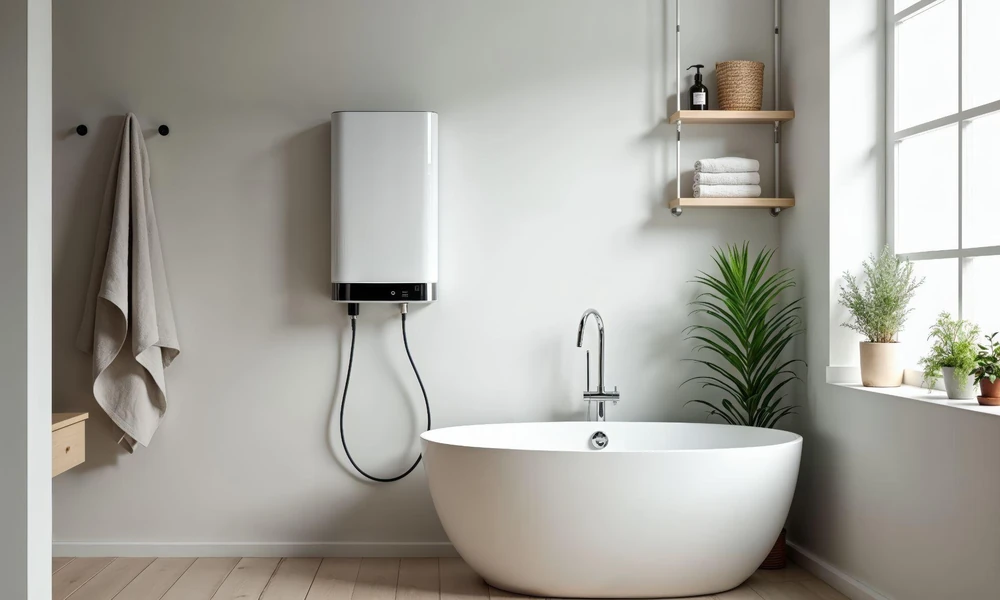
Bathroom dimensions and long-term maintenance preferences influence your final installation decision heavily. Instant heaters feature slim, lightweight designs that mount directly onto bathroom walls without occupying precious ceiling or cabinet space. In contrast, storage heaters require substantial ceiling void space, structural wall brackets, or dedicated cabinetry to support heavy, water-filled steel tanks. From a maintenance perspective, instant units feature straightforward electronic components that technicians service easily without draining massive water reservoirs. Storage tanks, however, require periodic flushing to remove accumulated sediment and routine anode rod replacements to prevent internal tank corrosion over time. Weighing physical space against your aesthetic preferences ensures you select a system that fits your bathroom layout seamlessly.
Finding Your Perfect Shower Match: The Final Verdict
Choosing between instant and storage water heaters ultimately depends on your household’s daily routines. By evaluating your family size, morning schedules, desired water pressure, and spatial limits, you can select the perfect water heater to elevate your daily shower experience.
Frequently Asked Questions
Which water heater type consumes less electricity for a small family?
Instant water heaters generally consume less electricity for small families because they draw power only while showering, eliminating standby energy loss.
Can I run a rain shower with an instant water heater?
Most standard instant heaters lack the flow rate needed for large rain showerheads, though high-kW or boosted-pump instant models can support modest rain fittings.
How long does a storage water heater take to heat up initially?
A standard storage water heater takes approximately 15 to 20 minutes to heat a full tank of cold water from cold start to operational temperature.
Upgrade your home with reliable, safe, and energy-efficient water heating solutions designed for modern living. Contact KDK today to transform your daily shower routine.
