The Significance of Moisture Management in Your Dwelling
Our homes serve as our private retreats, offering comfort and safety as we go about our daily lives. Yet, these sanctuaries are at risk from the natural world when moisture seeps in from outside. Furthermore, typical domestic tasks such as bathing, cooking, and washing clothes can lead to increased levels of indoor humidity.
What level of humidity is deemed appropriate? While specific recommendations may vary with local climates, maintaining indoor humidity levels between 30% and 60% is generally considered ideal. Exceeding this range can lead to damage to both the inside and the exterior of buildings.
What are the potential repercussions? Excessive moisture can lead to the growth of mold and mildew, as these organisms thrive in warm, damp environments. If not controlled, they can cause significant damage to walls, floors, and furniture within a home.
The presence of these bio-contaminants can be highly detrimental to health, posing a risk of respiratory issues, allergic reactions, and other health concerns for residents. Humidity also creates an inviting habitat for pests like cockroaches and dust mites, further exacerbating health risks.
How can one manage or prevent excess moisture? It’s crucial to identify and rectify any problem areas, which could include leaky roofs, faulty plumbing, inadequate ventilation, or poor insulation. Using dehumidifiers to reduce atmospheric moisture and investing in high-quality vapor barriers, placed under floors, within crawl spaces, or in attics, can effectively help to control moisture.
It’s of paramount importance for homeowners to maintain proper indoor humidity, not only for the sake of a comfortable living environment but also to prevent health and structural issues. For further information on managing home moisture, please see the detailed infographic provided below.
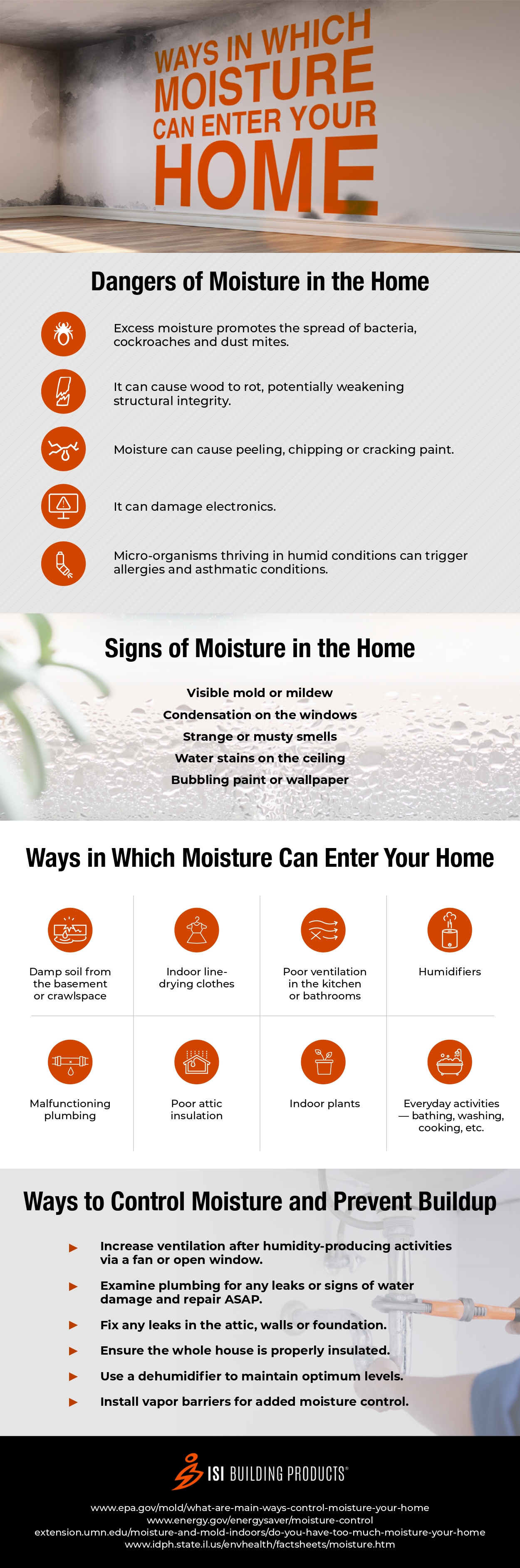
Infographic created by ISI Building Products, Offering High-Performance Crawl Space Encapsulation Vapor Barrier to Enhance Appearance and Protection