

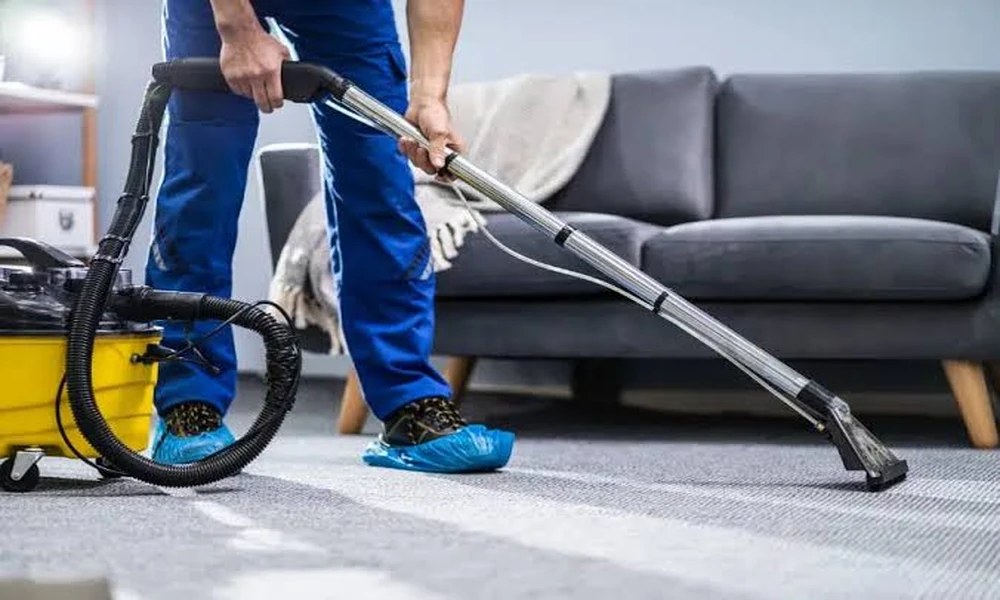
For ordinary carpet maintenance, renting an extractor does not eliminate the dry vacuuming stage. Removing loose soil first leaves a better-defined job for the later cleaning process. It also gives you a chance to see what is actually left on the floor before introducing water or cleaning solution.
The distinction can disappear when a household calls every machine a carpet cleaner. A dry vacuum, a spot-cleaning appliance and an extractor may all have hoses and collection containers, but that resemblance does not make their uses interchangeable. For a Markham home preparing for a planned clean, the useful question is what each stage is supposed to remove.
Loose material belongs in the first pass
Think about the ordinary contents of a busy living-room carpet: crumbs near a chair, loose grit on a walking route and fibres collected along an edge. Those observations point to dry preparation, not automatically to a stronger liquid treatment. The Carpet and Rug Institute’s care guide specifically advises vacuuming before do-it-yourself cleaning to remove as much dry soil as possible.
This is a sequence, rather than a contest between machines. The vacuum has its own useful task before extraction begins. Skipping it because a more substantial machine is arriving later confuses the order of work with the apparent size of the equipment. A large recovery tank does not tell you which preparation the carpet’s approved process requires.
Give the ordinary dry cleaning enough attention to be meaningful. A hurried pass around the most visible centre of the room may leave the neglected edges untouched. Work according to the carpet and vacuum instructions, with appropriate attachments for accessible areas. There is no universal number of passes that proves every floor has received sufficient preparation.
The vacuum must suit the carpet too
Preparation should not damage what the later cleaning is intended to maintain. Check the carpet’s care requirements and the vacuum manufacturer’s settings for that surface. A head that feels effective on one carpet may be unsuitable for another. If it catches, pulls or behaves unexpectedly, stop and resolve the mismatch instead of treating resistance as evidence that more force is needed.
When planning the next stage, Drying Equipment’s carpet extractor options in Markham provide a starting point for an equipment enquiry. Explain that the proposed work is routine cleaning and describe the carpet. Ask which preparation and cleaning process apply to the actual machine offered; do not assume that a category listing approves every carpet or every product.
Check the dry vacuum itself before blaming the floor for an unsatisfactory result. Its bag or container, accessible filters and attachments should be maintained as the instructions require. This is ordinary equipment care, not permission to dismantle a motor or improvise a repair. A tool that is not working properly makes the preparation stage harder to judge.
Loose fringe, damaged binding or an already lifting edge deserves particular caution. Do not pull a questionable area into a rotating head to see whether it survives. Set that portion aside for suitable advice. Preparation can be complete for the agreed safe area while a separate carpet defect remains unresolved.
Reconsider what remains after dry preparation
Once loose material is removed, the appearance may be different from the first impression. A patch that looked uniformly dirty might include a small distinct stain, a worn traffic lane and a change in pile direction. These are different observations. Wet cleaning should not be asked to deliver the same result for all of them merely because they occupy the same floor.
For example, a dining area may have obvious crumbs and a discoloured patch under one chair. Vacuuming addresses the loose material; it does not identify the cause of the discolouration. Avoid treating the clearer view as an invitation to experiment with several spot products. Establish what the carpet manufacturer permits and seek professional help with an unknown or persistent mark.
This reassessment can reduce the scope of the intended hire without making the preparation wasted effort. Perhaps the planned whole-room clean still makes sense. Perhaps an isolated issue needs specialist attention first. The decision is stronger because it follows an unobstructed view of the carpet, rather than the assumption that everything visible was the same kind of dirt.
The discussion here applies to ordinary dry household soil. A carpet affected by flooding, sewage, suspected mould or an unknown hazardous material is a different situation. Do not apply a routine vacuum-first plan to such an incident. Have the condition assessed and follow the appropriate professional response before choosing household cleaning equipment.
Make extraction the next appropriate treatment
After preparation, bring together the carpet’s instructions, the cleaning product’s permitted use and the extractor’s operating guidance. All three matter. Approval to use a solution on a carpet is not automatically approval to put it in a particular machine, and a machine’s capability is not a guarantee that a delicate textile should receive that treatment.
Keep expectations tied to the floor you actually have. Extraction may belong in a maintenance process, but it cannot be promised to reverse wear, restore a missing fibre or remove every permanent mark. Agreeing on a realistic purpose before the hire is easier than trying to recover an imagined result through repeated wet passes.
Dry preparation earns its place by leaving fewer unanswered questions for the next stage. At the end of that first pass, you should know what loose material has been removed, which areas remain doubtful and what treatment is suitable. The rented extractor then has a specific job to perform, instead of becoming a substitute for the entire carpet-care process.
