

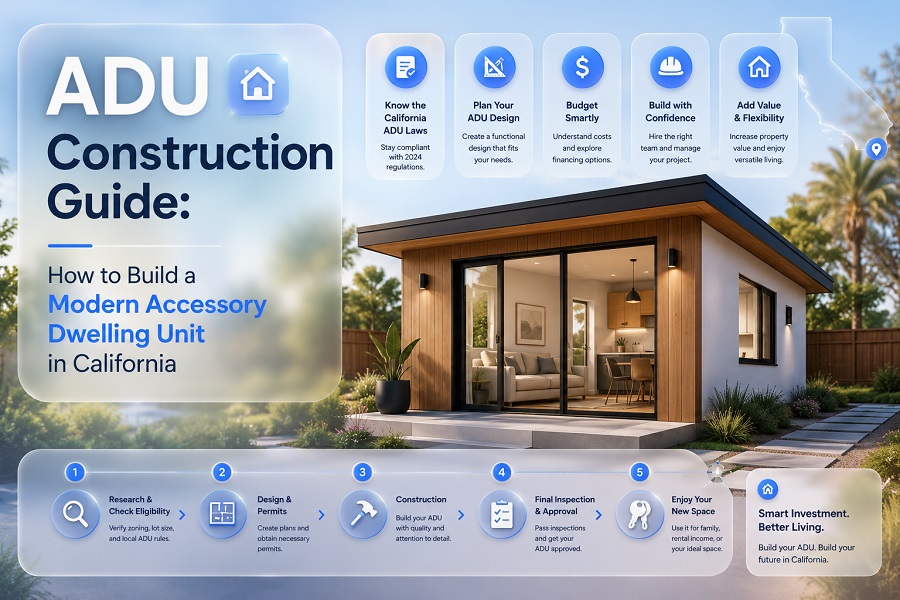
Accessory Dwelling Units, commonly known as ADUs, have become one of the fastest-growing residential construction trends in California. Homeowners are increasingly building ADUs to create rental income, add living space for family members, increase property value, or maximize the functionality of their property.
With California’s evolving housing laws and growing demand for flexible housing solutions, ADU construction has become a valuable investment for homeowners throughout the state. Whether you are planning a detached backyard ADU, garage conversion, attached ADU, or custom guest house, understanding the ADU construction process is essential before starting your project.
This guide explains everything homeowners should know about building a modern ADU in California, including planning, permits, design, costs, construction timelines, and important building considerations.
What Is an ADU?
An Accessory Dwelling Unit is a secondary residential structure built on the same property as a primary home.
ADUs may include:
- Detached backyard homes
- Garage conversions
- Attached additions
- Above-garage units
- Basement conversions
Most ADUs include:
- Kitchen
- Bathroom
- Bedroom or sleeping area
- Living space
- Separate entrance
Modern ADUs are designed to function as fully independent living spaces.
Why ADUs Are Popular in California
California homeowners are increasingly turning to ADU construction for several reasons.
Rental Income Opportunities
Many homeowners build ADUs to generate passive rental income.
An ADU may be used as:
- Long-term rental housing
- Guest accommodations
- Multi-generational housing
- Housing for adult children or parents
In high-demand California housing markets, ADUs can create significant long-term value.
Increased Property Value
A professionally built ADU can substantially increase property value by adding livable square footage and income potential.
Properties with modern ADUs are often more attractive to buyers seeking flexible living arrangements.
Flexible Living Space
ADUs can serve many purposes, including:
- Home offices
- Creative studios
- Guest houses
- Private suites
- Rental units
- Housing for caregivers or family members
This flexibility makes ADUs highly appealing for modern homeowners.
California ADU Laws and Regulations
California has passed several laws to simplify the ADU approval process and encourage housing development.
However, regulations still vary depending on:
- City
- County
- Property zoning
- Lot size
- HOA restrictions
Before starting construction, homeowners should verify local requirements with their city or county planning department.
Types of ADUs
Understanding the different types of ADUs can help determine the best solution for your property.
Detached ADU
A detached ADU is a separate standalone structure built away from the primary residence.
Benefits include:
- Greater privacy
- Flexible design
- Strong rental appeal
- Separate entrances
Detached ADUs are common for backyard construction projects.
Attached ADU
An attached ADU connects directly to the main home through a shared wall.
Benefits include:
- Easier utility connections
- Lower construction costs
- Efficient use of space
Attached ADUs are often created through home additions.
Garage Conversion ADU
Garage conversions transform existing garages into livable residential spaces.
Benefits include:
- Faster construction timelines
- Lower structural costs
- Efficient use of existing structures
Garage conversions are one of the most popular ADU options in California.
Junior ADU (JADU)
A Junior ADU is a smaller unit typically created within the existing footprint of a home.
JADUs often include:
- Small kitchens
- Shared utility systems
- Compact layouts
Local regulations may vary regarding JADU requirements.
Planning Your ADU Construction Project
Careful planning is essential for a successful ADU build.
Important planning considerations include:
- Property size
- Budget
- Utility connections
- Parking requirements
- Design goals
- Rental objectives
- Construction timelines
Working with experienced ADU builders and general contractors helps streamline the process.
Choosing the Right ADU Design
Modern ADU design focuses on maximizing functionality while maintaining efficient use of space.
Popular ADU design features include:
- Open floor plans
- High ceilings
- Large windows
- Modern kitchens
- Energy-efficient systems
- Indoor-outdoor flow
- Contemporary finishes
Thoughtful design can make even smaller ADUs feel spacious and comfortable.
ADU Size Considerations
ADU size depends on:
- Local zoning regulations
- Lot dimensions
- Budget
- Intended use
Many California ADUs range between:
- 400 square feet
- 1,200 square feet
Smaller units may reduce costs, while larger ADUs provide more flexibility and rental value.
ADU Permit Process in California
Building permits are required for ADU construction.
The permit process may involve:
- Architectural plans
- Structural engineering
- Energy compliance
- Site plans
- Utility approvals
- City plan review
Permit timelines vary depending on the city and project complexity.
Working with experienced ADU contractors familiar with California building regulations can help reduce delays.
Site Preparation and Demolition
Before construction begins, site preparation may include:
- Demolition
- Grading
- Utility planning
- Soil evaluation
- Foundation preparation
Proper preparation helps ensure structural stability and efficient construction progress.
Foundation and Framing
The foundation is one of the most important stages of ADU construction.
Common foundation types include:
- Concrete slab foundations
- Raised foundations
After foundation work is complete, framing begins to create the structural skeleton of the ADU.
Plumbing and Electrical Systems
Modern ADUs require proper utility integration, including:
- Plumbing systems
- Sewer connections
- Electrical panels
- HVAC systems
- Water lines
- Gas lines
Energy-efficient systems are increasingly common in California ADU projects.
Kitchen and Bathroom Construction
Kitchens and bathrooms are often the most important spaces in an ADU.
Modern ADU kitchens commonly feature:
- Quartz countertops
- Custom cabinetry
- Tile backsplashes
- Compact appliances
- Space-saving layouts
Bathroom construction may include:
- Walk-in showers
- Modern tile work
- Floating vanities
- Energy-efficient fixtures
High-quality finishes help increase rental appeal and long-term durability.
Tile and Stone Selection for ADUs
Tile and stone materials are popular choices for ADU construction because they offer durability and modern aesthetics.
Popular materials include:
- Porcelain tile
- Quartz countertops
- Natural stone accents
- Large-format tile
- Luxury vinyl flooring
Modern finishes help create a more upscale and attractive living space.
Energy Efficiency and Sustainability
California building standards emphasize energy efficiency.
Many ADUs now include:
- Dual-pane windows
- Solar-ready systems
- LED lighting
- Efficient HVAC systems
- Tankless water heaters
- Smart thermostats
Energy-efficient construction can reduce utility costs and improve long-term property value.
ADU Construction Timeline
ADU construction timelines vary depending on project size and complexity.
Typical timelines include:
Planning and Design
1 to 3 months
Permits and Approvals
1 to 4 months depending on jurisdiction
Construction
4 to 8 months on average
Custom ADUs with complex site conditions may require longer timelines.
ADU Construction Costs
ADU construction costs depend on:
- Unit size
- Site conditions
- Utility upgrades
- Material selections
- Structural complexity
- Labor costs
Detached ADUs typically cost more than garage conversions due to additional construction requirements.
Working with experienced contractors helps create accurate project budgets.
Hiring the Right ADU Contractor
Choosing the right contractor is one of the most important parts of the ADU construction process.
Look for contractors with experience in:
- California ADU regulations
- Residential construction
- Permitting
- Custom home building
- Utility coordination
- Modern design
A professional contractor should provide:
- Detailed estimates
- Construction timelines
- Permit guidance
- Clear communication
- Quality workmanship
Common ADU Construction Mistakes to Avoid
Homeowners should avoid common mistakes such as:
- Underestimating budgets
- Ignoring local zoning rules
- Choosing poor layouts
- Hiring inexperienced contractors
- Using low-quality materials
- Overlooking utility upgrades
Planning carefully from the beginning helps reduce costly issues later.
ADU Design Trends in California
Modern California ADUs often feature:
- Minimalist architecture
- Open-concept interiors
- Black frame windows
- Contemporary kitchens
- Large sliding glass doors
- Neutral color palettes
- Smart home technology
These features improve both functionality and rental appeal.
Benefits of Building an ADU
ADUs provide long-term benefits including:
- Additional income potential
- Increased property value
- Flexible living arrangements
- Multi-generational housing solutions
- Better use of property space
For many homeowners, ADU construction has become one of the most valuable residential investments available.
Final Thoughts
Building a modern ADU in California requires careful planning, quality construction, proper permitting, and experienced professionals. From garage conversions and detached backyard homes to luxury guest houses and rental units, ADUs offer homeowners flexible living solutions and strong long-term value.
Understanding the ADU construction process helps homeowners make informed decisions while avoiding costly mistakes during design and construction.
Whether you are planning an income-producing rental unit, a private family living space, or a modern backyard retreat, working with experienced ADU builders and general contractors can help bring your vision to life while ensuring your project meets California building standards and long-term performance expectations.
Frequently Asked Questions
What does ADU stand for?
ADU stands for Accessory Dwelling Unit, which is a secondary residential unit located on the same property as a primary home.
How long does ADU construction take in California?
Most ADU projects take several months depending on permitting, design complexity, and construction scope.
Can I convert my garage into an ADU?
In many California cities, yes. Garage conversions are one of the most common ADU construction options.
Does an ADU increase property value?
In many cases, yes. ADUs can increase both property value and rental income potential.
Do I need permits to build an ADU?
Yes. ADU construction requires permits and must comply with local building regulations and zoning requirements.
